Office or Apartment in Central Sofia in 2026: A Choice with Real Value
Some purchases look perfect on paper, then fall apart in daily life. Others feel modest at first glance, yet two years later you realize they were the calmest decision you made.
In 2026, choosing between an apartment and an office in the city center is no longer just taste. It is a question of usability, liquidity, and predictability. If your goal is to buy an apartment to live in, the logic is one. If you are thinking about a property investment, the logic changes. If you are already planning a future resale, there is a third logic.
If you have one minute: the three-filter rule
Before you get lost in square meters, floor plans, and views, run every option through three filters:
-
Filter 1: daily function
Will it make your life easier, or will it only look good during the viewing? -
Filter 2: liquidity
How easy will it be to rent or sell if your plans change? -
Filter 3: costs and management
What does it cost each month and how predictable are those costs?
When all three filters are green, you have real value, whether it is an apartment or an office.
Why 2026 reshuffles the criteria in Sofia city-center property
In Sofia, especially in the central zone, three trends now shape the decision:
-
Quality beats sheer size
Buyers care more about planning, daylight, quiet, and a controlled environment than about adding a few extra square meters. -
Flexibility is the new safety
A good property can shift roles: living, renting, working, mixed use. That is why well-planned new construction is gaining an edge. -
An address is not enough if the building does not work
Access, parking, entrances, security, and everyday logistics can matter as much as the façade.
This is most visible in new construction in central Sofia, where the quality of the environment often carries more weight than raw area.
City-center apartments: when the residential option is the safer move
An apartment in the city center is a strong asset when it follows one basic truth: people will keep wanting to live close to jobs, services, and transit. In 2026, that is especially true for city-center apartments with clear internal logic.
Scenario 1: buying an apartment for your own use
If you are buying a home, you are not buying only an apartment. You are buying a rhythm of life. Prioritize:
-
clear day-night zoning
Even a one-bedroom can live well if the living area works and the bedroom stays quiet. -
daylight and orientation
In the center, good light is a daily advantage and a future selling point. -
quiet at home
With new construction, look for real solutions that reduce street noise and internal noise between units. -
real-life logistics
Entrance, elevator, common areas, returning with groceries, stroller, luggage. Small things become big over time.
Scenario 2: property investment through renting
When you buy to rent, you want stable rent and minimal vacancy. In 2026, demand remains strongest for:
-
functional one-bedroom and compact two-bedroom units
-
good daylight and a practical kitchen setup
-
predictable building management and clean common areas
-
parking options or a credible transit alternative
In central Sofia, the most expensive thing is not a slightly lower rent. It is having no tenant.
Scenario 3: resale in 3 to 7 years
If you are planning an exit, think like the future buyer, not like the excited viewer. The fastest-moving apartments tend to be:
-
easy to understand in layout
-
easy to explain in 30 seconds
-
free of hidden compromises: awkward corridors, dark kitchens, tight bathrooms, inconvenient entrances
Luxury property is not only premium finishes. It is clean logic, execution, and a controlled environment.
Offices in the city center: when the office is the better investment
An office is a different asset. It depends on how the business environment evolves and whether the space solves a real problem. In the center, an office can be more stable than residential, but only if its function is clear.
Who still looks for city-center offices in 2026
The most consistent demand comes from activities where the address and access are part of the service:
-
legal and consulting practices
-
accounting and financial services
-
medical and diagnostic services, where regulations and access allow it
-
studios, agencies, and services built on regular meetings
-
representative offices that need a central presence without huge area
Here, the word is representative, but it must be backed by comfort: entrance, orientation, visibility, and organization.
What can ruin an office before it starts
City-center offices are sensitive to details. A few issues can make them hard to lease:
-
poor visibility or awkward access
-
weak daylight that makes the space tiring
-
unreliable climate control and ventilation
-
noise from street exposure or internal systems
-
no short-stop or parking logic if visits are essential
An office does not sell through words. It sells through whether someone can imagine a normal workday there without constant irritation.
A frequently missed detail: use status and practical limitations
This is not legal theory. It is practical sense. An apartment and an office behave differently in daily use, tenant profile, building rhythm, and expectations from common areas.
-
apartments win when calm, comfort, and privacy lead
-
offices win when access, visibility, and meeting logistics lead
In the city center, details are amplified because the city is more intense: more movement, more interaction, and more need for order.
Ten questions that decide the choice
-
What is your primary goal: living, rent, capital growth, a mix?
-
How long do you plan to hold: 3, 5, 10 years?
-
Can the property change function without destructive renovation?
-
What is your most realistic exit: resale or long-term rent?
-
What is your biggest constraint: budget, time, risk, peace of mind?
-
Do you need parking, or can you live without a car?
-
Do you value quiet and privacy, or visibility and access?
-
How critical is daylight for your life or your work?
-
What could go wrong in the worst case and how would you respond?
-
What is the one thing you cannot fix with money after you buy?
Usually: location, access, and building organization.
A simple comparison model without complex math
Step 1: write down the real monthly cost of ownership
Include, roughly:
-
monthly maintenance costs
-
utilities baseline
-
a reserve for repairs and renewal
-
for offices: the cost of keeping a representative standard
The point is not the purchase price. The point is the cost of holding the asset.
Step 2: assess demand stability
-
apartments: wide and constant demand, sensitive to comfort and logistics
-
offices: narrower demand, but stable if the product is precise
Step 3: add a flexibility bonus
A property that can switch roles without breaking itself deserves a premium. This is one of the strongest arguments for well-planned new construction.
A local anchor for Pirotska Residence without turning into promotion
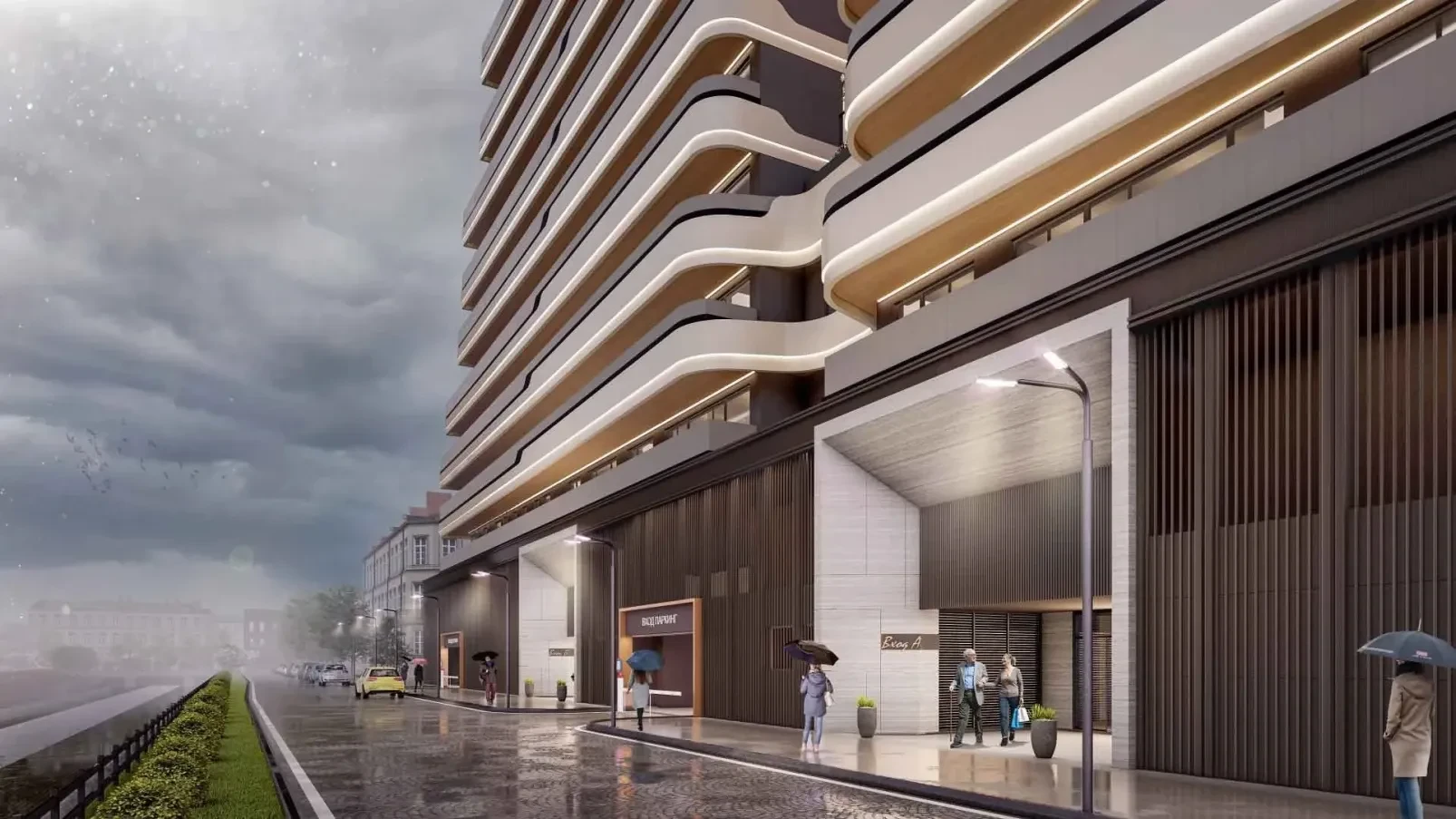
In projects like Pirotska Residence in central Sofia, the choice between apartment and office is not abstract. The building is presented as a modern residential and office development on Pirotska Street, designed around usability, access, and clear function, so the asset remains flexible across living, renting, or representative use.
Key takeaways
-
If you want a broadly liquid asset, a city-center apartment is usually easier to sell.
-
If you need a representative function and a stable tenant profile, the right office can be stronger.
-
In 2026, winners are properties that are easy to live in, easy to rent, and easy to explain.
-
The safest choice is the one that stays logical even when your plans change.