Mortgage for an Apartment in Central Sofia in 2026: Terms, Costs and a Real-World Calculation
A mortgage loan is the main way to finance the purchase of an apartment in central Sofia. Banks in Bulgaria offer housing loans subject to specific requirements regarding down payment, income and property type. These conditions directly affect the budget you can access and your actual monthly payment. This article looks at the key parameters, the costs beyond the interest rate, and how the process works when buying directly from the developer.
How a Housing Loan Works When Buying an Apartment in New Construction
For an off-plan property, the bank typically disburses the loan in tranches tied to construction progress. For a completed property with Act 16, the loan is usually disbursed in a single drawdown at the notarial transfer.
Difference Between an Under-Construction Property and a Completed Property from the Bank’s Perspective
When you buy an apartment under a preliminary contract before Act 16, the bank will usually release the loan in tranches upon issuance of Act 14 and Act 15, or at specific construction milestones agreed with the developer. Interest accrues only on the amount that has actually been drawn. For a completed property with a certificate of commissioning (Act 16), the bank releases the full amount when the notarial deed is signed.
When the Bank Values the Property
For a property under construction, the bank values the land and the project rather than the finished apartment. A new valuation at Act 16 is separate and is usually higher. That is why, when buying at an early stage, the approved loan amount may be lower than expected, while final drawdown at Act 16 reflects the actual market value.
LTV and Down Payment: How Much Own Contribution Is Needed
The standard maximum financing level is 85% of the appraised value of the property (LTV 85%). Banks in Bulgaria usually require at least a 15% down payment, while a higher own contribution often leads to a better rate.
How LTV 85% Works in Practice
LTV (Loan-to-Value) is the ratio between the loan amount and the appraised value of the property. For an apartment valued by the bank at BGN 300,000, the maximum loan is BGN 255,000. If the agreed purchase price is higher than the bank’s valuation, the entire difference is borne by the buyer and increases the actual down payment.
Why a Larger Own Contribution Is More Advantageous
With a down payment above 30%, most banks offer a reduced interest margin. Beyond the lower rate, a smaller loan also means a lower total amount repaid over the full term. On a 20-year mortgage, the difference between 80% and 65% LTV can mean tens of thousands of leva less in interest.
DTI: How Banks Assess Whether Your Income Is Sufficient
Banks in Bulgaria generally follow a DTI rule under which total monthly debt obligations should not exceed around 50% of net monthly income.
How DTI Is Calculated in Practice
DTI (Debt-to-Income) is the ratio between all monthly loan obligations and net income. With a net income of BGN 3,000, the maximum combined monthly instalment on all loans is around BGN 1,500. If you already have a car loan with a BGN 400 monthly payment, the acceptable mortgage payment is about BGN 1,100. With joint applicants, both incomes are added together, which increases the accessible budget.
How to Estimate the Maximum Loan Based on Your Income
With a net income of BGN 3,000 and no other loans, a maximum monthly payment of around BGN 1,500 at 3.5% interest over 25 years corresponds to a loan of about BGN 260,000. At 4.5% interest, the same payment corresponds to a loan of about BGN 235,000. These figures are indicative, and final approval depends on the bank and the borrower’s profile.
Mortgage Interest Rates in Bulgaria in 2026
As of the beginning of 2026, the average interest rate on new housing-loan business is around 2.5%, while the APR is around 2.7% to 2.8%. Actual mortgage offers vary depending on the bank, the size of the down payment, the term and the borrower’s profile.
Fixed vs Floating Interest Rate
A fixed rate remains unchanged for an agreed period, usually 5 or 10 years, after which it becomes floating. A floating rate follows a reference index, in most cases EURIBOR, plus a fixed bank margin. After Bulgaria joined the euro area, loans denominated in lev were converted into euro at the fixed rate of BGN 1.95583 per EUR 1, with the contractual terms preserved.
How the Building’s Energy Class Affects the Rate
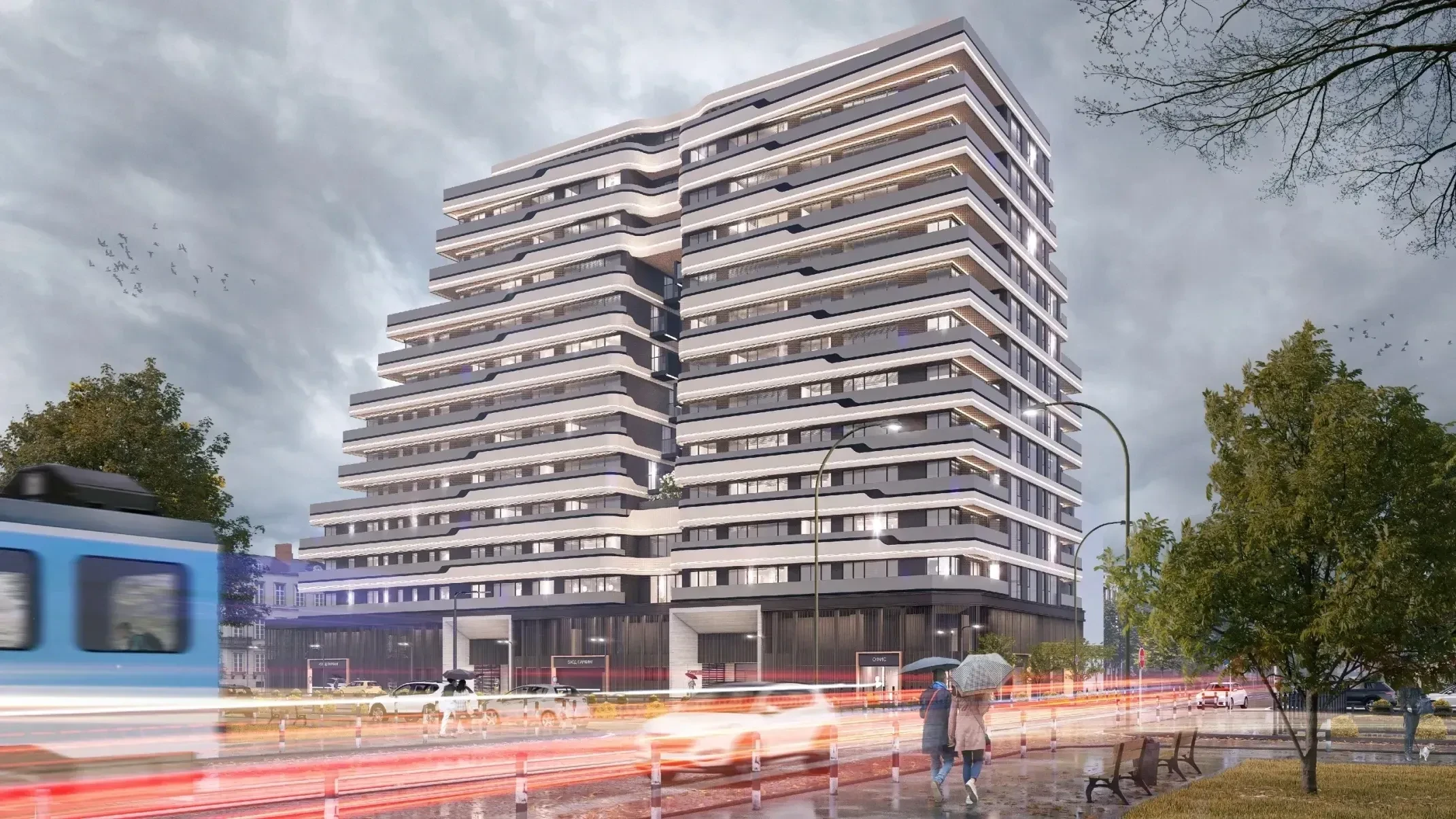
Several banks offer a reduced interest margin when buying a property with energy class A or higher. Since Pirotska Residence is a new-construction project, the building will have an energy-efficiency certificate. When applying, check whether the bank offers a preferential rate for green buildings.
Costs Beyond the Interest Rate
The one-off costs of taking out a mortgage are typically between BGN 1,500 and BGN 3,000 for a standard residential loan. These include the property valuation, bank fee, notary fees for the mortgage, registration and insurance.
|
Cost |
Indicative value |
|
Property valuation |
BGN 200 - 500 (depends on the bank and the property type) |
|
Bank commitment fee |
0.5% - 1% of the loan amount |
|
Notary for mortgage creation |
according to the tariff, based on the loan amount |
|
Mortgage registration |
0.1% of the loan amount |
|
Property insurance (annual) |
0.1% - 0.25% of the insured value |
|
Life insurance (if required) |
depends on the bank, income and term |
Note: banks update their fee schedules periodically. Before you apply, ask for the European Standardised Information Sheet (ESIS), which sets out all costs in one place.
Real-World Calculation: Mortgage for an Apartment in Central Sofia
For an apartment with a purchase price of BGN 400,000 (around EUR 204,500) and a 20% down payment, a BGN 320,000 loan at 3.5% over 25 years produces a monthly instalment of about BGN 1,600.
Illustrative Parameters and Monthly Instalment
|
Parameter |
Example A |
Example B |
|
Purchase price |
BGN 400,000 |
BGN 600,000 |
|
Down payment |
20% / BGN 80,000 |
25% / BGN 150,000 |
|
Loan amount |
BGN 320,000 |
BGN 450,000 |
|
Interest rate (indicative) |
3.5% floating |
3.5% floating |
|
Term |
25 years |
25 years |
|
Monthly instalment |
~ BGN 1,600 |
~ BGN 2,250 |
|
Required net income (50% DTI) |
~ BGN 3,200/month |
~ BGN 4,500/month |
The amounts above are calculated using a constant rate and annuity payments. With a floating rate, the actual monthly instalment will change when EURIBOR moves. When planning your budget, add notary fees, the property acquisition tax and bank-related costs (in total about 3% to 6% of the purchase price).
Documents Required When Applying for a Mortgage
Banks require two categories of documents: documents relating to the borrower (income, identity, social-security history) and documents relating to the property (preliminary contract, land documents, building permit).
Documents for the Borrower
• ID card of the borrower and any co-borrowers
• Employer income certificate or tax return for self-employed applicants
• Bank statement for the last 3 to 6 months
• Certificate of marital status
Documents for the Property in New Construction
• Preliminary contract with the developer
• Title deed for the land or an agreement granting a right to build
• Building permit
• Approved architectural design and apartment layout
Buying Directly from the Developer with a Mortgage
Buying directly from the developer does not make the credit process more difficult. The preliminary contract with the developer replaces a contract with a private seller and serves as the key document before the bank.
How the Process Works at Pirotska Residence
When buying at Pirotska Residence, the buyer signs a preliminary contract with the developer and then applies for a mortgage with a bank of their choice. The bank receives the preliminary contract and the documents for the land and the building from the developer. Usually, once Act 16 has been issued, the notarial deed is signed and the mortgage is created at the same time. The currently available apartments at Pirotska Residence are offered directly by the developer, without an intermediary and without commission.
No Commission: How It Affects the Mortgage Budget
A buyer’s agent commission when purchasing an apartment is typically 2% to 3% of the price. For an apartment costing BGN 400,000, that means between BGN 8,000 and BGN 12,000. In a direct purchase, that amount remains in the buyer’s budget as additional down payment or as a buffer for mortgage-related costs.
For a full overview of taxes, notarial fees and everything payable on top of the property price, see the guide to apartment purchase costs in Bulgaria.
Frequently Asked Questions
What is the minimum down payment for a mortgage in Bulgaria?
The standard minimum down payment is 15% of the appraised value of the property (LTV up to 85%). If the bank valuation is lower than the purchase price, the actual down payment increases automatically. A higher own contribution usually means a better interest rate.
What are mortgage rates in Bulgaria in 2026?
As of the beginning of 2026, the average rate on new housing-loan business is around 2.5%, while APR is around 2.7% to 2.8%. Specific offers vary by bank, down payment size and borrower profile.
Does the bank choose the notary in a mortgage transaction?
No. The notary is chosen by mutual agreement between buyer and seller. The bank participates only in the creation of the mortgage and may require a notary with experience in mortgage transactions, but it does not choose the notary unilaterally.
Can you take out a mortgage for an apartment under construction?
Yes. For an apartment purchased under a preliminary contract before Act 16, banks can release the loan in tranches tied to the progress of the construction. Interest accrues only on the disbursed amount. Final drawdown is made at the signing of the notarial deed after Act 16.
What income is needed for a BGN 300,000 mortgage?
With a monthly instalment of around BGN 1,500 (BGN 300,000 at 3.5% for 25 years) and a 50% DTI rule, a net income of at least BGN 3,000 per month is needed if you have no other credit obligations. With joint applicants, both incomes are added together.
Is life insurance mandatory with a mortgage?
By law, life insurance is not mandatory. Banks may, however, require it as a condition for a lower rate or for longer-term loans. The only insurance legally required is property insurance in favour of the bank, up to the amount of the loan.
How does euro area accession affect mortgage loans?
From 1 January 2026, loans denominated in lev were converted into euro at the fixed rate of BGN 1.95583 per EUR 1, while the contractual terms remained unchanged. With a floating rate, future changes depend on the applicable reference index and the agreed margin.