City Center Light: Why You Think You’re Buying an Apartment but End Up in a Cave, and How to Avoid It
In the city center, light is not romance. It is a scarce resource, eaten away by the urban canyon effect, nearby buildings, poor glazing choices, and design shortcuts disguised with interiors.
If you are reviewing central apartments and analysing Sofia property listings for sale with future value in mind, there are three decisions you will pay for every day: orientation, floor level, and real daylight.
You buy square meters once. You live with bills, overheating, permanent dimness, and dependence on elevators and water pressure for years. In 2026, the professional approach is simple: you are not buying a compass direction. You are buying access to the sky, solar control, and engineered comfort you can predict.
Five quick rules so you do not fool yourself
-
If your living room cannot see the sky, the stated orientation does not matter.
-
West-facing glazing without serious solar control and high-selectivity glazing turns into a summer oven and higher cooling costs.
-
The best floor is the one that manages dust and noise without making you a hostage of building infrastructure.
-
For rentals, choose predictable comfort, not extremes and compromises.
-
Liquidity comes from daylight and sensible bills, not sales talk at a viewing.
Why daylight is worth more than a few extra square meters
In the city center, buyers often overpay for two extra square meters and then live in half-light. That is a bad trade. Daylight is the invisible multiplier of value.
A bright living room makes a home feel larger. Daylight signals quality instantly during a viewing. It affects how much artificial lighting you use, how well you work from home, how comfortable you feel in winter, and how quickly summer heat becomes a problem.
With central properties, daylight is harder because the city is dense. On paper you may have south orientation. In reality you may stare at a neighbouring façade ten meters away and live in permanent shade.
The standard is ruthless: daylight must be proven on site, not promised in a brochure.
Orientation in the city center: the urban canyon makes the compass nearly useless
Outside the center, orientation often behaves like a textbook. In the center, you face a different reality: setbacks, building heights, shading, narrow streets. That is the urban canyon.
Check the sky angle, not the direction
In the city center, south-facing on paper can be misleading. If there is another building in front of your window, you do not get sun. You get a neighbour’s wall and constant shade.
A practical check that does not forgive
Sit where you will actually live, on the sofa or at the table. Look up toward the window. How much real sky do you see. If you mostly see walls and only a thin strip of sky, the orientation is secondary. The apartment will be darker, colder in winter, and more dependent on artificial lighting.
South: it can be power, or a false hope
South works only if the sun truly reaches the rooms. If a nearby volume blocks it, you gain no benefit, only expectation.
If south is real, the next test is solar control. South without proper control through glazing and façade logic can become overheating. In the city center, overheating is not a comfort issue. It becomes a financial one.
East: pleasant for daily life, not a guarantee of a bright home
East gives morning light. Many people love that, especially with early routines and a natural start to the day.
But in the center, east can also be shaded. And if your living room is only east-facing, afternoons can feel dim, something most buyers underestimate until they live it.
West: beautiful sunsets, a summer oven if the developer shifts the problem onto you
Many buyers fall for sunsets. The reality is simple: west sun in summer is low, aggressive, and difficult to control.
If someone tells you just install an air conditioner, they are pushing their defect onto your bill. West-facing glazing without a serious solution through high-selectivity glazing and external solar control means higher cooling costs, heavier comfort, and often constant AC use, which also increases indoor noise and drafts.
North: even light, but a colder character if the building is average
North gives softer, more even light without harsh direct sun. That can be pleasant if you dislike glare.
But north punishes heating needs if the building envelope and details are not top-tier. In central areas, north often translates into a persistently cooler feel in certain zones.
Floor level and real comfort: dust, noise, safety, access, and infrastructure traps
In the city center, the floor is not status. The floor is strategy.
Low floors: street contact, dust, and noise you cannot negotiate away
A low floor can be convenient. But in the center, convenience comes with constant street exposure: dust, noise, heavy pedestrian flow, sometimes smells from nearby venues and infrastructure.
On low floors, you must verify two things as a baseline: window sealing quality and a real air strategy, so you are not forced to live with windows open.
Mid floors: the most common working balance, but only if the building is intelligently designed
Mid floors often offer the best compromise between noise, dust, daylight, and access. But do not buy the rule. Buy the specific reality: street profile, nearby façades, noise sources, and actual daylight.
High floors: a privilege only when infrastructure matches the price
Bluntly, a high floor in an older city-center building is often a trap. Pumps, water pressure, elevator behaviour, hot water delivery, waiting time. People fall in love with the view and then live with infrastructure compromise.
In new construction, a high floor is a privilege only if the developer invested in quiet, fast elevators and intelligent water pressure management. If not, you will wait for the elevator in the morning and accept it as normal for the center. It is not normal. It is what happens when corners were cut.
Summer and winter modes: the truth shows up when the season flips
The most expensive mistakes happen when you view in one season and assume the apartment will feel the same all year.
Winter: daylight plus warmth, only if the building works as a system
Winter is when true south exposure can create comfort, if sun actually reaches the space. But if glazing and detailing are mediocre, you can get light and heat loss at the same time. That is the classic error: a bright home that feels cold at your feet.
Check for drafts, temperature consistency, and how the area around windows feels. Those details determine real bills.
Summer: architectural laziness shows up on your electricity bill
Many projects build west-facing glass walls. That is architectural laziness. An air conditioner fights symptoms while you live with drafts, noise, and constant expense.
Real control comes from a combination: high-selectivity glazing, smart façade logic, and detailing that prevents overheating from becoming your daily mode.
A practical test
Ask directly how overheating is managed. If the only answer is air conditioning, that is not a solution. It is an admission that the project moved the problem onto your costs.
Twelve viewing checks for daylight, floor comfort, and resale liquidity
This is your toolkit. If the seller gets irritated, you are checking the right things.
-
Sky angle from the sofa
Sit and measure how much sky you actually see. If it is little, daylight will be limited regardless of orientation. -
Shadow logic around 14:00
Observe where shadows fall on façades and inside the room. In the center, neighbours cut the sun. You want proof, not promises. -
December reality
Ask what daylight looks like in December. If you get a vague answer, it is likely nobody treated daylight as a design standard. -
Room depth check
Deep rooms with small windows look fine on plans and fail in real daylight. -
West risk test
If there is west glazing, ask how overheating is prevented. Do not accept install an AC as an answer. -
Noise check at your floor level
Stand by the window and listen with it open, then closed. Floor level can change noise, but not always in your favour. You want reality. -
Dust and street exposure on low floors
Look at the street flow and immediate surroundings. If the street is active, a low floor requires stronger solutions or you will be cleaning constantly. -
Look down
Are there canopies or elements under your window that collect trash, amplify noise, or create an unpleasant feeling when windows are open. -
Elevator capacity
Ask how many apartments are served by one elevator. If the number is high, waiting becomes your daily routine. -
Elevator behaviour, not elevator existence
Call it. Listen. In a quality building, the machine uses variable frequency drive control, starting and stopping smoothly without vibrations that travel into bedrooms. -
Water pressure and hot water on higher floors
Ask how water pressure is managed and what happens at peak demand. A high floor is a privilege only with engineered reliability. -
Liquidity as a scenario
Imagine renting it out. What is the first complaint: dark, hot, noisy, elevator delays, high bills. If you can predict a complaint during the viewing, you already see the risk.
Investment lens: why these factors move price and speed of sale
In Sofia, the easiest properties to sell are the ones that require no explanations: daylight, predictable bills, normal comfort.
Daylight sells first because you see it instantly.
Overheating sells last because buyers now think in monthly cost and daily life.
Floor level sells as risk. Low floors without dust and noise solutions are compromise. High floors without infrastructure are compromise. Mid floors with real daylight are predictable value.
Mini matrix: criterion and effect, without decoration
South on paper but no sky in view: dimness and disappointment.
West without solar control: summer oven and higher cooling costs.
North with average energy logic: cooler feel and higher heating demand.
Low floor on a busy street: more dust and noise, higher demand for air and sealing performance.
High floor without infrastructure: waiting, dependence, water pressure issues, daily irritation.
Mid floor with real daylight: the strongest comfort and liquidity balance.
Final decision criteria when you want to buy in the city center
If you decide to buy in the center, do not buy promises. Buy conditions you can verify.
First: proven daylight.
Without sky in view, you will live with compromise, regardless of orientation.
Second: solar control, not chasing heat with electricity.
If the sun is blocked by materials and detailing, comfort and bills are predictable. If it is chased from inside with AC, you pay for someone else’s laziness.
Third: the floor as a system of advantages and risks.
Your floor choice should reduce urban pressure, not make you dependent on elevator behaviour and water pressure.
Finally: a comparison standard, not a slogan.
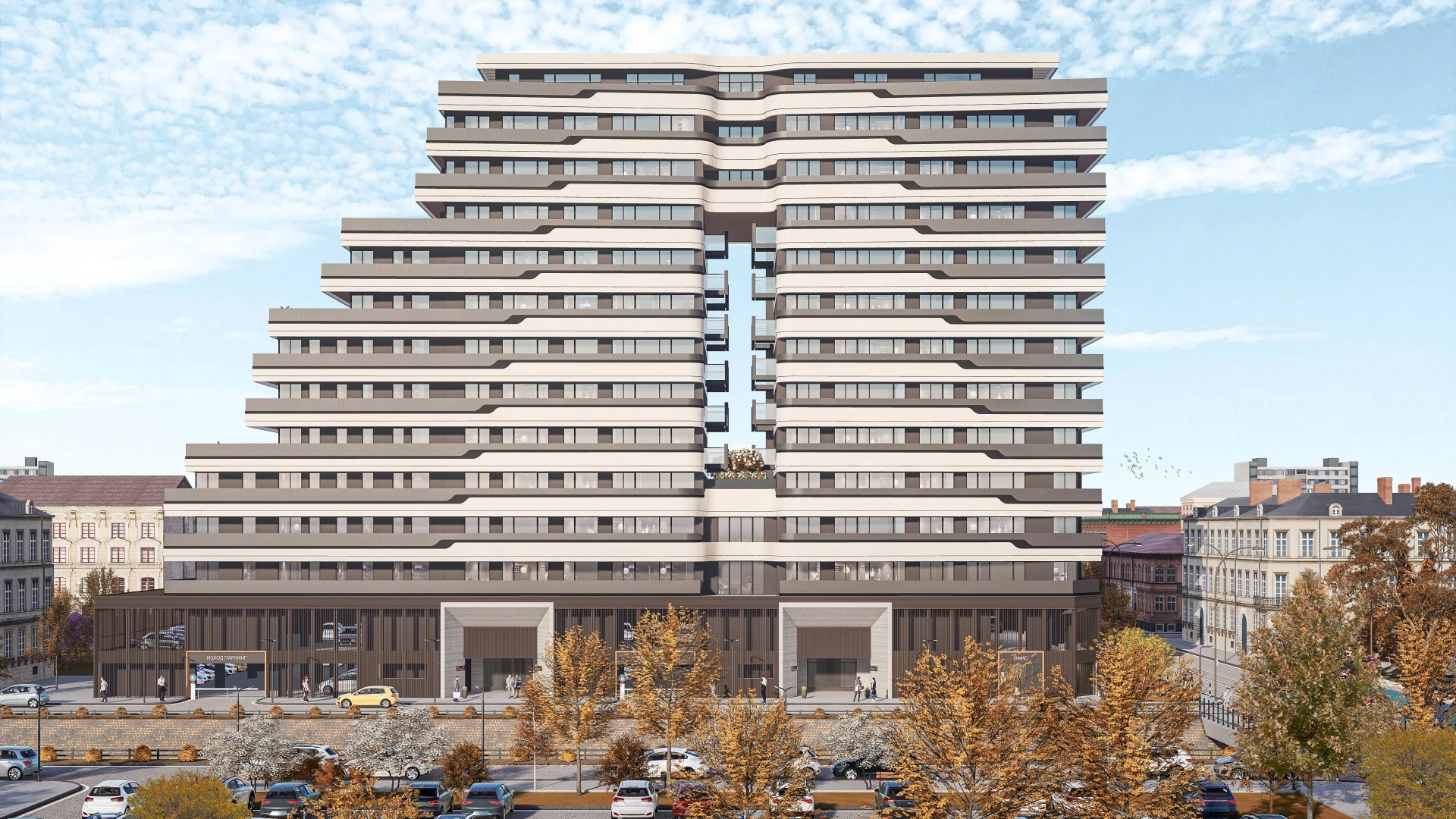
On central locations like Pirotska Street, a serious developer does not sell direction. The building is shaped so daylight is maximised and overheating is controlled through envelope and glazing choices, not through promises. When you buy directly from a developer with long experience, you buy a project where someone already did the thinking about your bills and daily life, instead of leaving you to discover the problems after the deal.