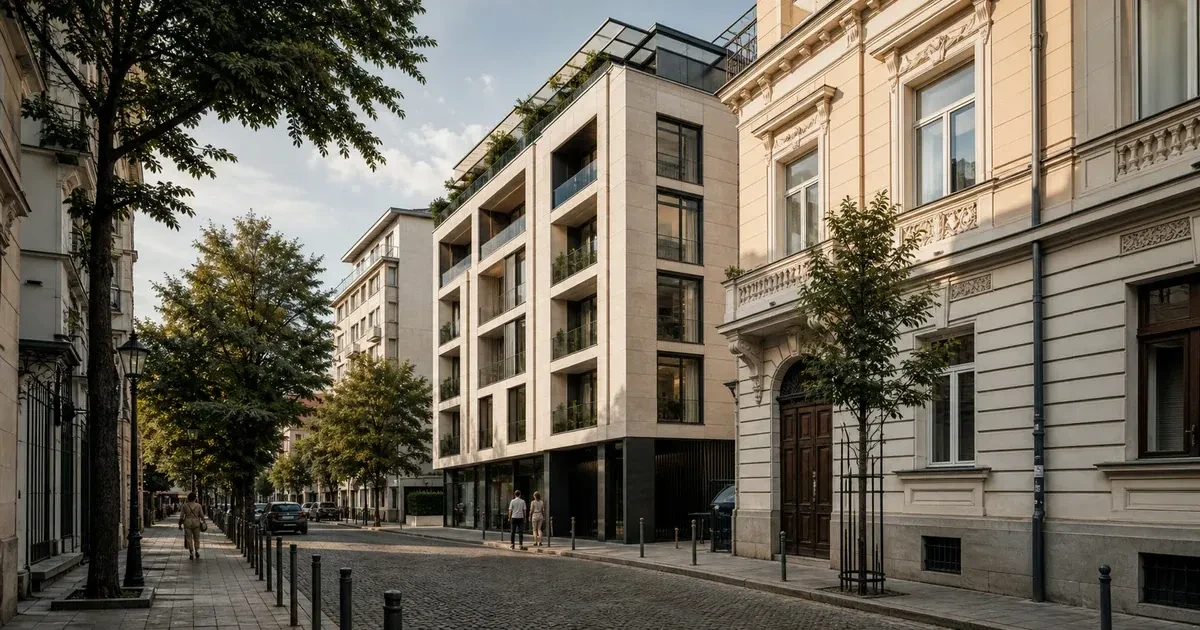
Buying a new apartment near cultural heritage in central Sofia
A purchase in Sofia's historic centre calls for an exact-address check, not an assumption based on neighbouring façades. The new building itself may not be a protected cultural asset, while the plot may still fall near an individual asset, within a group asset or inside a protection zone. That can affect later work and the surrounding urban environment.
Sofia's Architecture and Urban Planning division provides public map layers for cultural heritage, while the National Institute for Immovable Cultural Heritage maintains national specialist information. The map is a starting point. A transaction or proposed alteration needs an official address-specific answer. Sofia urban-planning map, in Bulgarian
Sources were checked on 1 September 2026. This article does not claim that Pirotska Residence or a neighbouring property has a particular protected status. Only an official property-specific search can establish that.
Check three different forms of protection
First establish whether the building or plot is itself an immovable cultural asset. Then check whether it lies within a group cultural asset. Finally, determine whether it falls within the protection zone of another asset.
These positions are not interchangeable. They can produce different coordination procedures and controls. Do not use “listed building” as a blanket label for the entire old centre.
Collect the cadastral identifier, administrative address and plot details. Search the municipal layers and, where necessary, obtain information from NINKN and the Ministry of Culture. If the result affects your decision, request written evidence rather than relying on a map screenshot.
How the protected setting may affect a new-apartment owner
The issue is wider than demolition of an old façade. External equipment, signs, façade changes, roof work, boundaries and street-facing elements may matter. Some interventions are subject to coordination under Bulgaria's Cultural Heritage Act.
For an apartment owner, the practical boundary is often between an internal change with no external effect and work that touches common parts or the appearance of the building. Even in a new project, the façade and roof are generally not elements one owner can alter freely.
If your purchase depends on an outdoor air-conditioning unit, glazing, signage or another visible feature, ask an architect to check the rules before you commit. A neighbouring installation is not permission.
The setting can add character and constraints
A historic street can offer identity, human scale and a recognised address. Those are real qualities for an owner-occupier and for tenants seeking central living. They do not automatically produce a higher yield or guaranteed resale value.
Inspect neighbouring buildings, pavements, lighting and access. Look for planned public works and temporary restrictions. Protected status does not mean every nearby building is well maintained. A neglected façade does not prove the absence of protection.
You are buying one home inside a specific urban system. The attractive street photograph is the beginning of the check.
What to request from the developer
The approved new-build project should reflect the regimes applicable when it was authorised. A buyer should understand whether cultural-heritage coordination was involved, what it covers and which design features cannot later be changed freely.
Request the approved site plan, façades, building permit and relevant coordination documents for review by your architect or Bulgarian lawyer. If your decision depends on a future intervention, an oral “it should be fine” is not enough.
For Pirotska, put an address-specific question to the team. The useful answer is evidence for the building and its immediate setting, not a general description of central Sofia.
Check daily use as well as legal status
A protected setting can coincide with narrow streets, controlled parking, visitors or mixed uses. This is not true of every address. Visit in the morning, evening and at the weekend.
Check delivery routes, vehicle access, waste collection points and planned street works. If the building relies on loading windows or controlled entry, understand how that works in practice.
This is separate from the heritage-status check. One tells you what can be changed. The other shows how you will live there.
Frequently asked questions
Is every building in central Sofia protected?
No. The status of the precise asset, group area and protection zone must be established through official records and documents.
Can I place air-conditioning equipment on the façade?
That depends on the approved project, common parts, condominium decisions and the applicable heritage regime. Check before buying if it is important to you.
Does a protected setting guarantee a higher property price?
No. It may add identity and limited supply, while value still depends on the apartment, building condition, maintenance, access and market.
Verified sources
- Sofia Architecture and Urban Planning: public map, Bulgarian
- National Institute for Immovable Cultural Heritage
- Bulgarian Cultural Heritage Act, Ministry of Justice
For the separate title review, use Pirotska's Bulgarian guide to restitution, mortgages and encumbrances in central Sofia.
View Pirotska and request the documents for the exact address and selected apartment.